I’ve been to a fair few Communist countries in my day. I’ve been to both Russia and China, but it was the trip to Cuba with my 3rd ex-boyfriend that was really life changing.
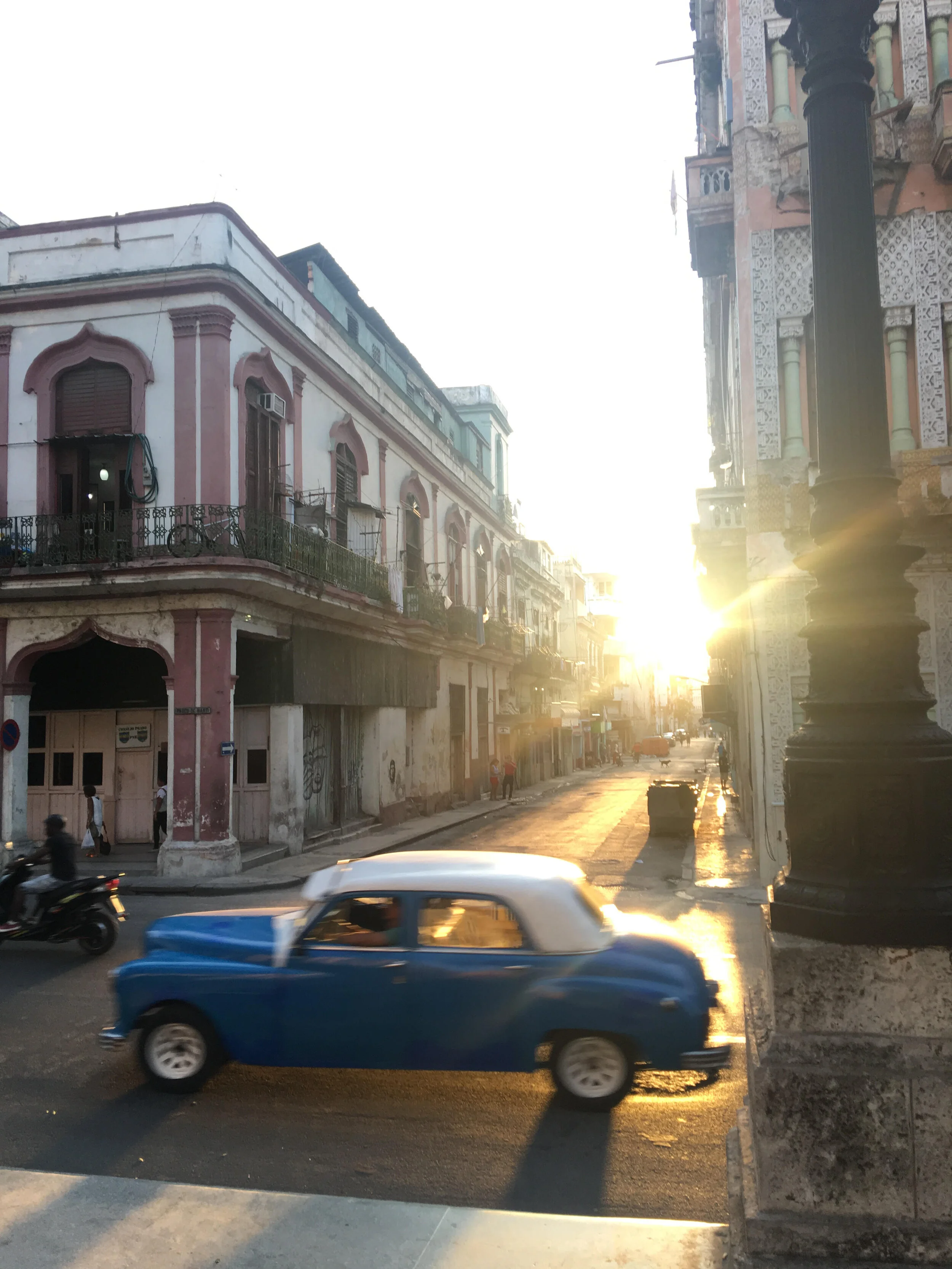
Havana Street Sunset
I’m not going to talk about what we did because I’m not basic. What occurs underneath the heat of the hot Havana sun stays there, but let’s just say we had a really good time together.
Cuba is a place where food is still distributed by the government. Running a restaurant is difficult as sourcing food is controlled by the government. In America, if you wanted to obtain beef, you’d have several different vendors to choose from; in Cuba, there is no luxury. You get what you are given, and oftentimes that will depend on your family’s standing with the government.
Of course you can still go to the store and buy more food but the selection is very scarce. Certain foods are subsidized by the government. I remember eggs being subsidized. From memory, there are two different currencies in Cuba. The first one operates as a sort of US dollar (CUC) , while the other are pesos. Pesos are what the locals use, so if you’re trying to be frugal, push to pay for things in pesos.
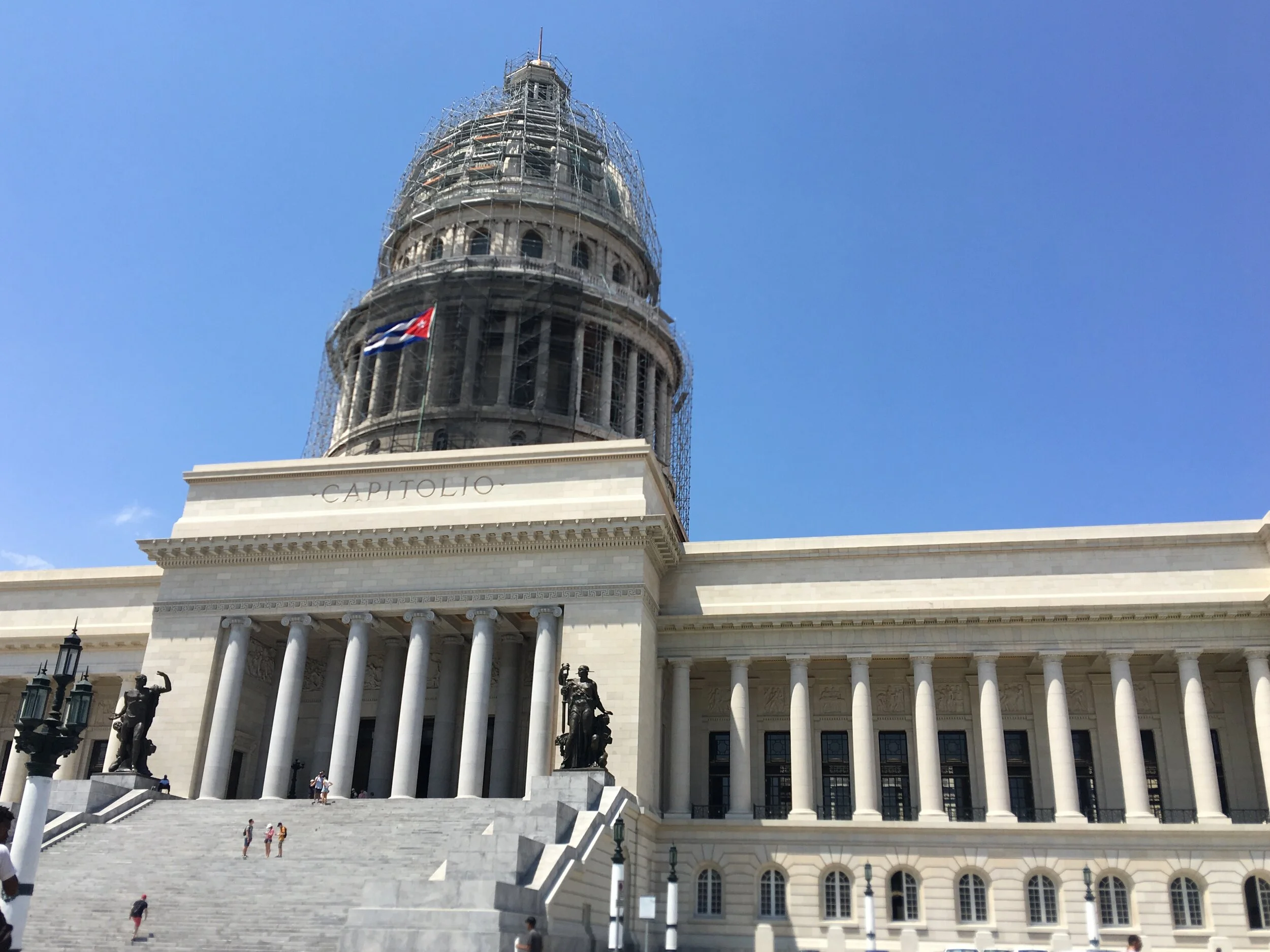
Havana Capital
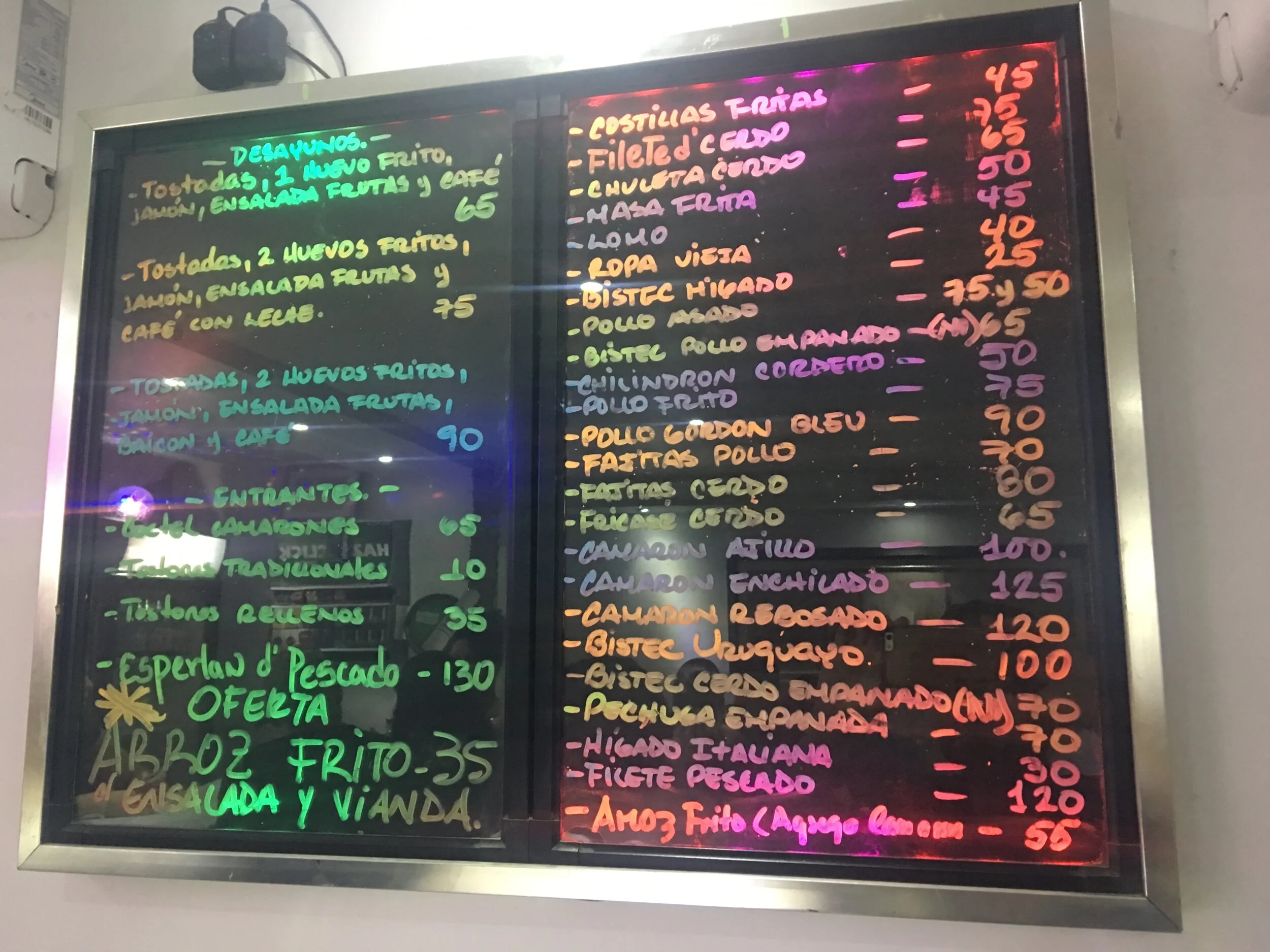
When dining in a communist country, consistently going to the same place will prove highly beneficial to your trip. There was one restaurant we went to everyday where the food was charged in pesos. It was called “Las Chifladas,” located on Animas Street between Galiano & San Nicolas. I don’t want to assume anything but the place did feel Queer-friendly if that’s important to you.
Consistency is the backbone of any thriving business regardless of the country’s governmental structure. Even Starbucks, a capitalist powerhouse, even their business depends on having people consistently come back to their store to buy, almost everyday.
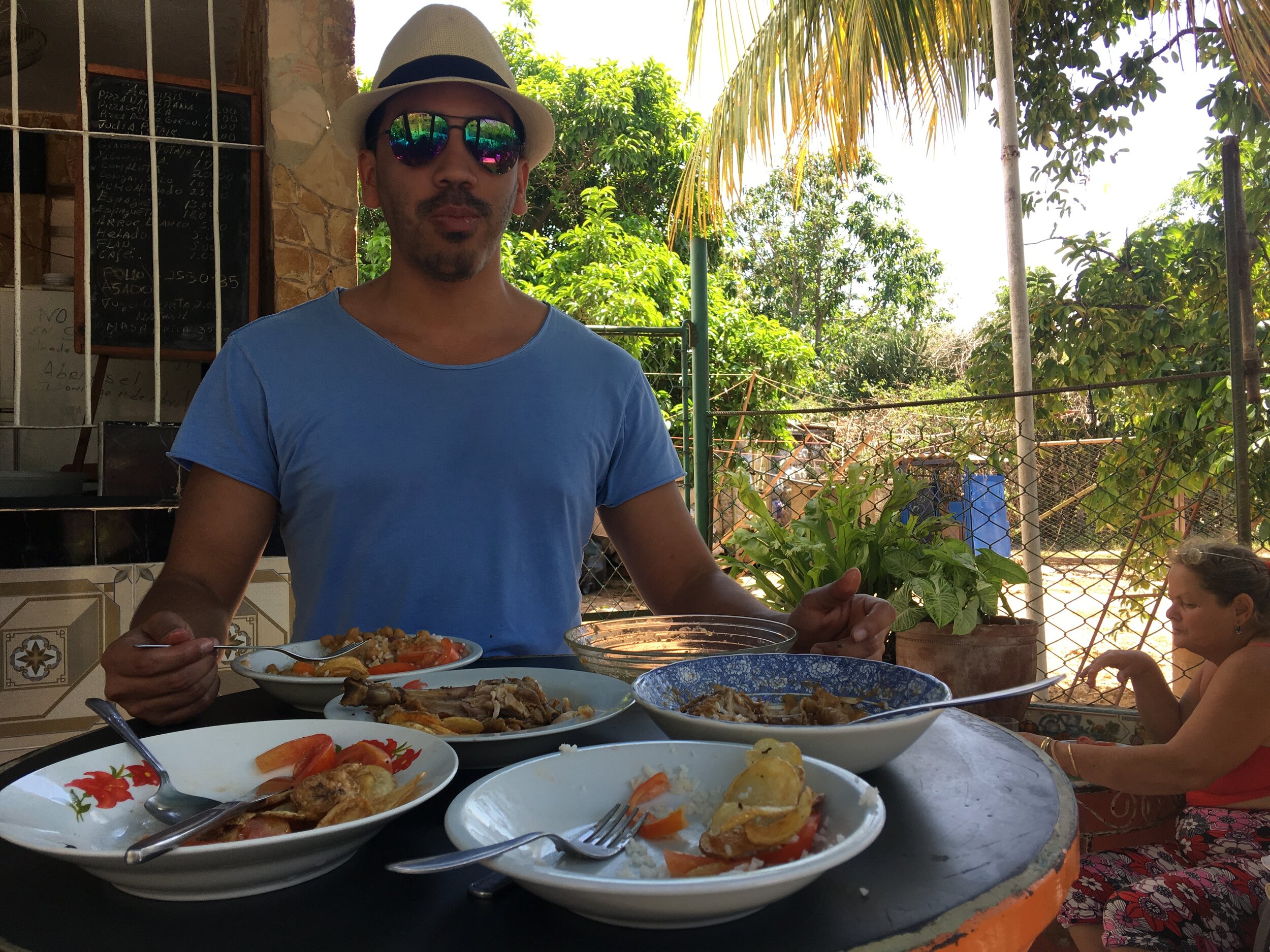
Not Las Chifladas but a tasty chickpea soup.
The food at “Las Chifladas” tasted fresh earlier in the week than it did later in the week. This led me to believe the food was probably delivered late Sunday night or early Monday morning. We also noticed that the portion sizes were significantly more generous on day 3 and 4 than they were on day 1 and 2.
The rice also changed when we returned back with consistency. Rather than the regular plain white rice, they’d offer us spicy rice, which was this heavenly, turmeric yellow jambalaya situation with tons of fresh garlic. My favorite were the pork chops. The chop was cooked excellently: perfectly sealed and brown on both sides, with a tender soft center. I can still hear the sizzling on my plate. Holy hell. I salivate at the thought of yellow rice, onions, garlic, beans, infusing the senses with so many delicious flavors, activating every part of the palette. The food was nourishing and soulful and by Day 3, you could taste the love in every bite. And to keep it real with you: the taste of love from a meal inside a harsh communist country hits different.
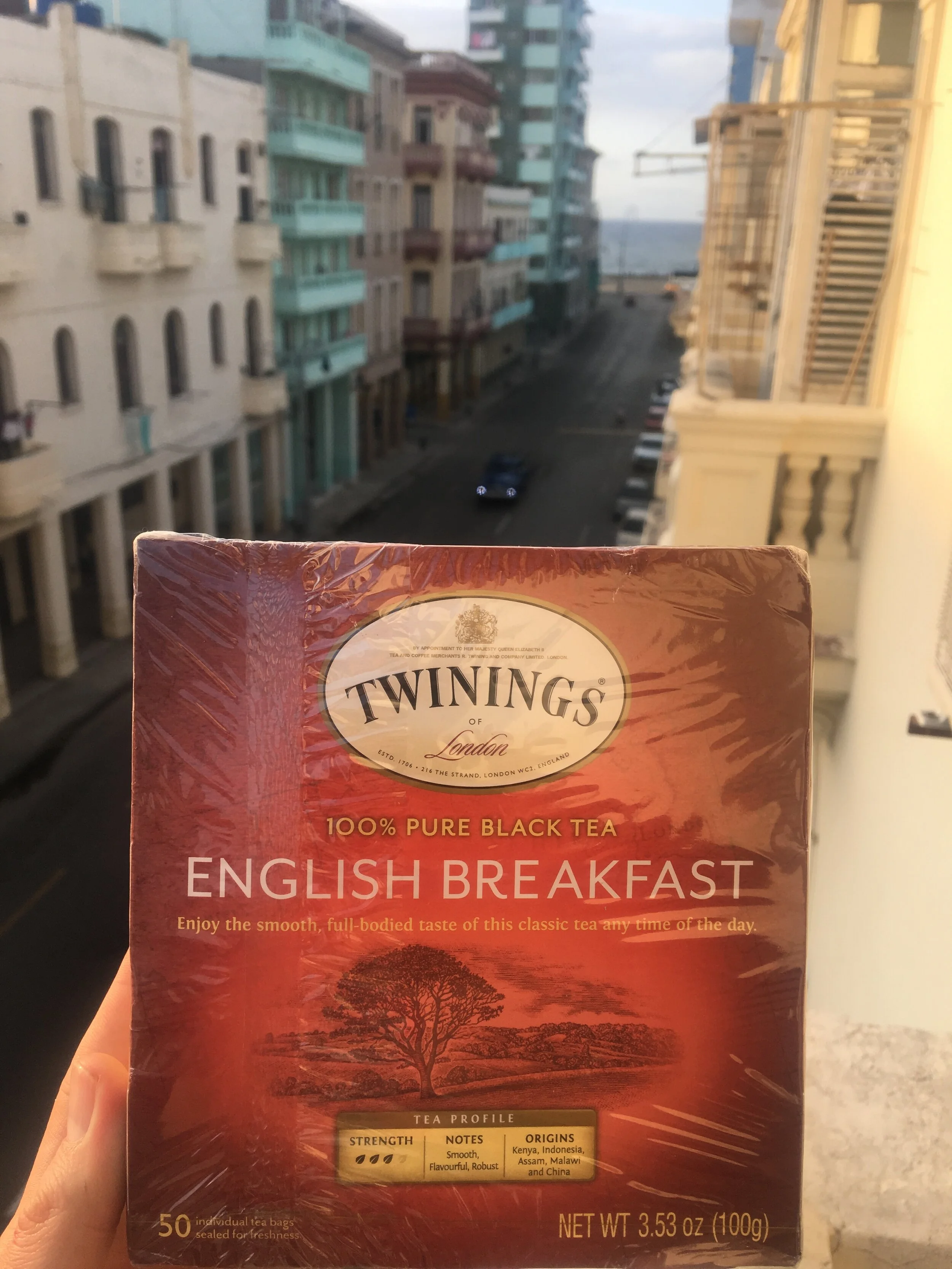
English Tea in Cuba
I’m fast-forwarding two and a half years and I’m now living in New York City. I’m standing in Gristede’s staring at a can of Goya beans. I’m not concerned with the can itself as much as I am the sticker on top of it. The sticker looks fresh, as if it had been placed there earlier that day.
I recall a conversation I had with an old co-worker of mine at Starbucks in Chelsea, a fellow Barista. They were talking about how food prices always go up around the first of the month in his neighborhood because that’s when everybody collects their food stamps. They advised the best and cheapest time to buy your groceries was mid-month. I stare at the can of beans and realize I’ve never spent $2.49 for a can of black Goya beans at Gristede’s before. I don’t think I’ve even spent over $2 for a can of black Goya beans, well, ever!
This small price increase, to me, represents that ongoing battle between government and business. The game closely resembles that of cat and mouse. Businesses are always trying to extract more money from the government in the form of tax breaks, meanwhile the government is always trying to extract more from businesses in the form of taxation. This very basic game of cat and mouse resulting in small price increases every month has damaging effects. The very people on the welfare system who are dependent on government for their food via food stamp distribution are the ones who end up having to absorb the cost. The ones on welfare are the most affected by this, but it also affects those of us who aren’t on welfare as we end up having to absorb the cost too.
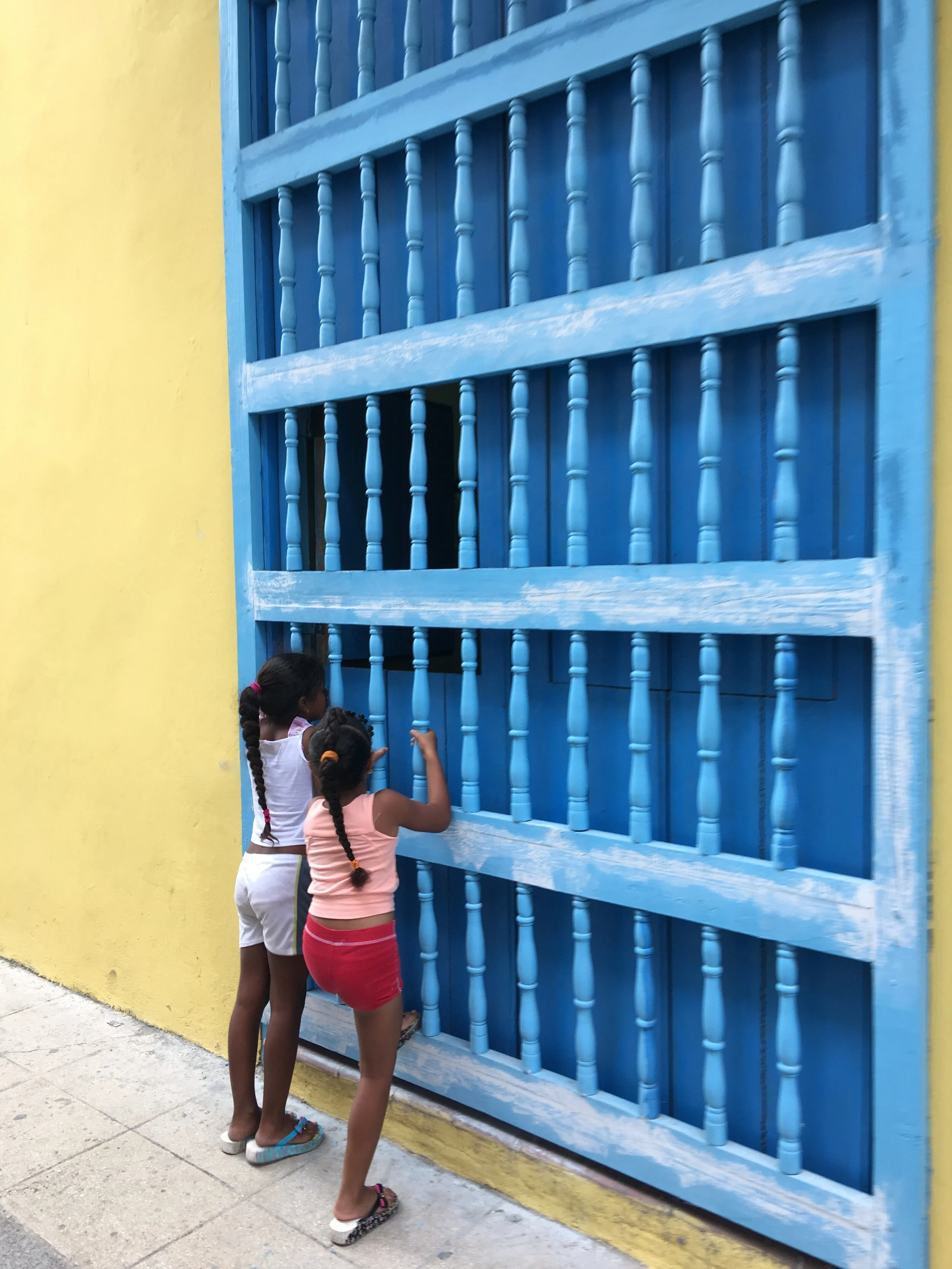
Two little girls watching men roll cigars
I’m extremely privileged to say that I don’t know what a food stamp looks like, but if I did, I’d do my groceries on the 2nd and 3rd week of the month to ensure that I’m maximizing my food yield. But fundamentally, the idea of government controlling food intake makes me incredibly nervous. It’s not quite communist Cuba obviously, but the sentiment of control taken out our hands and placed into another is concerning.
It is only fair to dissect one’s own privilege when confronted with it. In The Kingdom of Tonga, everybody owns the land they live on. If it doesn’t belong to you, it belongs to somebody in your family. It doesn’t belong to a bank, or some landlord that’s taking rent from your pocket and putting it in their own, it belongs to you, debt-free.
You can farm and grow crops and eat them yourself, the way Mother Nature intended, without the worry of a food stamp, or a price increase, or worse yet, a mortgage repayment. The land you live on is yours and the food you eat is earned. Tonga is one of the only countries in the world to have never been colonized. Look it up. The Kingdom of Tonga has never been colonized and that’s a fact, one we are incredibly proud of. When you talk of imperialism and the pitfalls of colonialism, please omit me and my people from the conversation.
On the Tongan coat of arms it says: “Ko e ʻOtua mo Tonga ko hoku Tofiʻa",” which literally translates to: "God and Tonga are my inheritance."
If I ever choose to opt-out of this capitalist society and “live off the grid,” I have the option to do so, and that’s a powerful Ace of Spades to hold in your back pocket. If all of this fails for me, I have farmland and a home waiting for me in the south pacific. These are my roots.
The ability to self-sustain and survive outside of any governmental framework, communist or capitalist, is the new sexy. Owning a farm? So chic.
Now, for the sake of pure fantasy, let’s imagine what I’d look like in Tonga opting out of a capitalist society. I’m imagining multiple sexy farmhand men, and while they’re all working up a sweat and testosterone, feeding the fat of the land, I’m boiling yams in the kitchen using fluoride free rainwater, filtered, and brought to an alkaline state.
I’m wearing a paisley housedress with a problematic head-wrap, and underneath this I’ll have an even more problematic hairstyle of cornrows. I know all my liberal friends are mortified reading this but their disapproving algorithms are but a distant memory. I don’t have to prove anything to anybody here. I get to just be me. Do you even remember what it feels like to just be yourself?
Diana Ross is playing on the radio and I’m channeling RuPaul in Wyoming.